

Later this week, the United States will celebrate its 250th birthday. It’ll be an awkward celebration because as a nation we haven’t been this polarized since the Civil War. Hopefully, crossing such a significant historic milestone will allow for the type of individual and national introspection that brings us closer together instead of driving us farther apart.
While I see and write about many things that give me concern for the future, I’m more optimistic than pessimistic – and that optimism is created largely by the positive experiences I’ve had all across this nation.
I’m among the 1 to 2 percent of Americans who have visited all 50 states, and in most cases I stuck around long enough to meet local residents. I’ve spent money in 49 (all but North Dakota), stayed at least one night in 44, and lived in eight. And perhaps most illuminating of all, I’ve lived in the reddest area of a red state (rural Mississippi), the bluest area of a red state (Austin, Texas), the reddest area of a blue state (Spokane) and the bluest area of a blue state (the Portland area). I grew up poor and rose to a comfortable upper-middle-class life.
In other words, I’ve experienced America from a wide array of perspectives. I’ve learned that despite very obvious differences, we have more in common than one would ever guess if their perspectives were based on social media instead of lived experiences and conversations with actual people.
In celebration of our nation’s 250th birthday, here are four memories from my travels that give me hope that my grandchildren will celebrate a 300th birthday in a still great nation.
The bicentennial in Mississippi
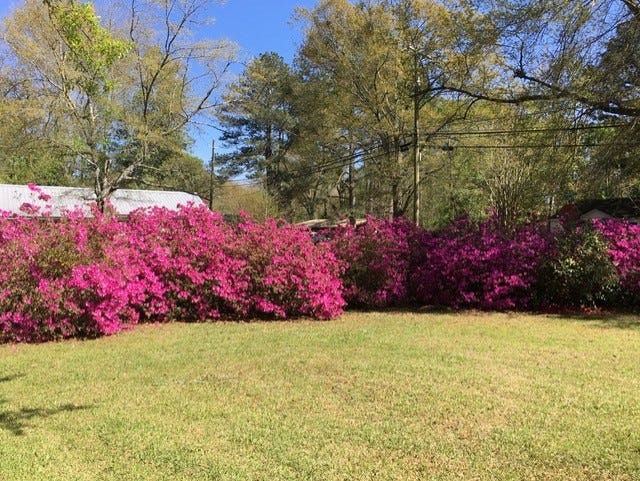
The United States’ last big national birthday party was in 1976, the bicentennial. While the nation was not as divided as now, the national mood was anything but optimistic.
Much like now, confidence in government was low. The nation had an unelected president, Gerald Ford, who was appointed vice president after Spiro Agnew resigned and ascended to the presidency after Richard Nixon resigned. Also, much like now, gas prices were a major concern, as tensions in the Middle East remained high in the wake of the 1973 Yom Kippur War and the Arab oil embargo that followed it. And, overall, the U.S. economy was in worse condition than today, strangled by stagflation (a combination of slow economic growth and high inflation).
However, I don’t remember a level of division and pessimism close today. Perhaps that’s because I was 16. Maybe it’s because I was in an isolated rural Mississippi town. Certainly, in an era before social media (or even cable-TV news) the flames of pessimism spread far slower.
In contrast, I remember excitement and pride. Surveys support my memory, showing much more interest in bicentennial celebrations than exists for the 250th celebration. In 1976, people could separate their feelings about the government from their feelings about the nation. Somewhere along the line, we seem to have lost that distinction.
We need to remember that the nation is an ideal and the people who are drawn to that ideal. And that ideal of a nation where we can live free and pursue our dreams should not change based on who is in the White House, Congress or governor’s mansion.
Moving to the Northwest
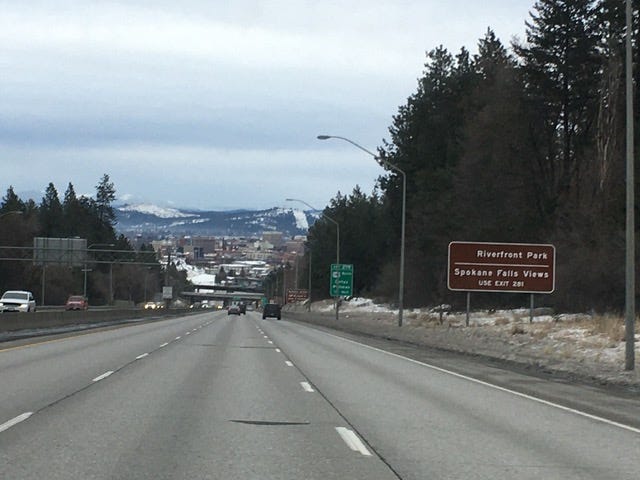
I moved to the Northwest with some trepidation, in part because of distance from family and in part because I wasn’t sure I would fit in. I only did it because my fiancee (now wife) was from Oregon. And I started off in the shallow end of the pool, Spokane. That’s not an insult to Spokane, which ranks only behind Austin in my ranking of the places I’ve lived. It was much easier to adjust in Spokane than it would have been in Portland.
While Spokane obviously isn’t Southern, it shares some characteristics with places I lived in the South. Much like Mississippi it suffers from an inferiority complex (Seattle has more things than us; people look down on us.) Hunting and fishing (two of the favorite Southern past times) are popular. It also was a similar size to Jackson, Miss., and Montgomery, Ala., two places I had lived.
So, Spokane felt somewhat familiar despite the distance from home while also providing new adventures and experiences. I loved a true four-season climate and found it almost beyond belief that I could make weekend trips to Canada, which seems only slightly closer than the moon when you grow up in South Mississippi.
Moving to Spokane from the South (I lived in San Antonio at the time) was eye-opening in many ways, but one of the important things I learned was that I could adapt and feel comfortable in an environment different from any I had lived in before. As we celebrate the nation’s 250th birthday, we need to remember that we are better as a nation when all Americans can feel comfortable in every corner of the nation.
A baseball trip with my sons
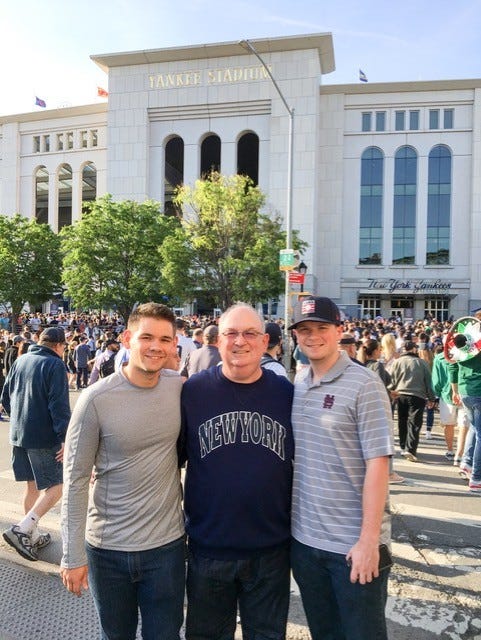
While there’s room for debate about whether baseball still earns the moniker “America’s pastime,” there’s no question that it is woven into Americana and the nation’s history in a way other sports aren’t.
I’ve never been much of an athlete and of all the sports I tried playing, I was worst at baseball. Neither of my sons played baseball, either. Yet, some of our best memories are attending baseball games together and, in particular, a 10-day, 7-city, 8-stadium trip in June 2018, with the Baseball Hall of Fame thrown in on an off-day.
The trip included Washington, D.C., Philadelphia and New York City, three of America’s signature cities when it comes to history. I had been to all three cities before but never in the same weekend. On this early June weekend in June 2018, I was struck by how many different types of people were in each city. There were tourists from just about anywhere you can imagine as well as locals with varied interests and backgrounds.
One Saturday early in the trip, we started in Washington, D.C., passed through Maryland and Delaware, made it to Philadelphia by the second inning of the Phillies game, left the game as a different set of fans were arriving for a Tim McGraw concert across the street at the Eagles’ football stadium, ran the “Rocky steps” at the Philadelphia Art Museum, drove to Atlantic City to walk the Boardwalk, then spent the night about halfway between Atlantic City and New York City. We arrived in New York shortly after noon the next day.
I’m not sure I’ve ever seen as wide a range of people in a weekend, even though we only traveled about 225 miles. Yet, all those people only represented a fraction of the people, interests and opportunities spread across the country. That’s something everyone needs to remember. Even if we travel a lot and meet thousands of people, we’ll never understand what’s important to many of our fellow citizens. We should accept and celebrate the fact not everyone takes the same path through life we do. If we want to live “our way,” we should grant others that same opportunity.
Alaska, the Last Frontier

Alaska is the least-visited state, for the obvious combination of weather and geographic reasons. It was the 47the state I visited, coming close to its moniker, The Last Frontier.
The thing that struck me most about Alaska was how familiar it felt. In many ways, Alaska is the Northwest on steroids: mountains, only bigger; beautiful coastline, only more; wildlife, only more plentiful and dangerous; outdoors opportunities, which are even more abundant than in Oregon. And the states share a history closely tied to frontier explorers.
Yet, for all the similarities, Oregon and Alaska’s politics are close to opposite. That wasn’t always the case, but as Alaska has clung to its roots as a state rich in natural resources, Oregon has aggressively tried to minimize the use of its natural resources.
For a while, the divergence worked for Oregon as it attracted migrants and jobs from other states. But both migration and economic growth have dried up and the state finds itself without clear identity, unless it’s as a liberal playground.
Is there a point to this trip down memory lane, you ask. It’s that all parts of this nation have things to admire and enjoy. People are more alike than different, even when they live in contrasting environments and have opposite political preferences.
Fifty years ago, Americans found it easier to look past their differences and celebrate our common humanity and love of freedom. We don’t need a great leader to return us to that shared pride of country. All it requires is an individual commitment by all of us. What better time to start than the nation’s 250th birthday.
Mark Hester worked 20 years at The Oregonian in positions including business editor & editorial writer. He is regular contributor to Oregon Roundup. oregonroundup.substack.com