
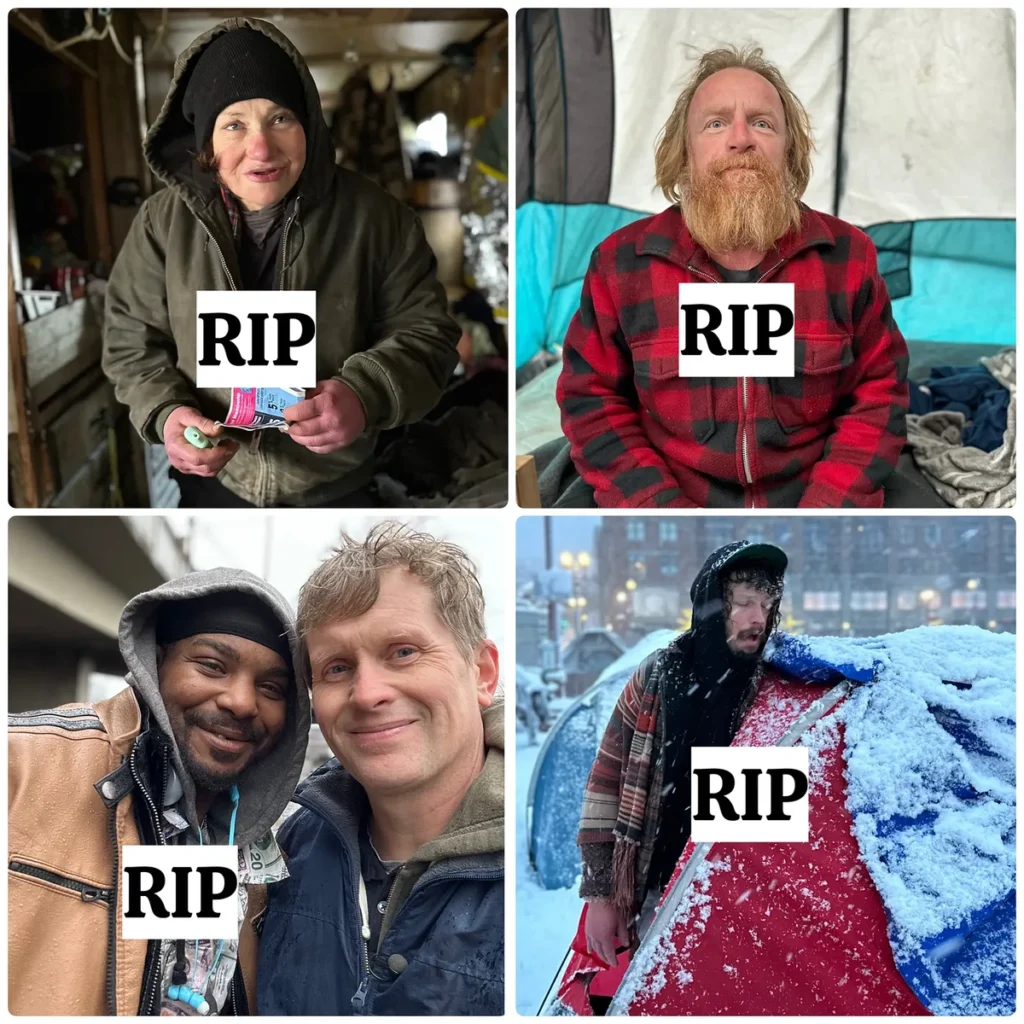
A homeless person can be dying in plain sight and still be invisible to the system we pay to help save them. The job of social services should be to help people make the necessary changes to reach their fullest potential. That should mean assertive outreach, trust-building, treatment access, medical care, mental health intervention, recovery housing, reunification and long-term follow-through. Instead, the system too often does the bare minimum. The social service system that is passive, limited and sometimes nonexistent needs to be held accountable.
I have interviewed thousands of homeless people over the years, and hundreds have died soon after, often from drug-related causes. What haunts me most is that nearly all of them knew exactly where their behavior was headed. They were not stupid. They were not unaware. Many openly admitted their addiction would probably kill them. But addiction is not just a bad habit. It is a vicious, all-consuming disease. Add deep mistrust of the social service system, years of trauma, untreated mental illness, physical pain and an inability or unwillingness to accept help, and for many people their fate is basically sealed.
This week, a grieving son reached out and asked to meet with me. He told me that a woman I had interviewed a few months ago had just passed away. I first saw her downtown in a wheelchair. She appeared to be asking people if they had fentanyl. When I looked down, I saw exposed bone on her right leg. It was one of the worst wounds I had ever seen. It was likely connected to xylazine, the animal tranquilizer now commonly found mixed with fentanyl. Xylazine does not respond to Narcan the way opioids do, and its effects on the body can be horrific. People develop deep wounds, rotting tissue, infections and eventually lose limbs. I have seen it with my own eyes.
The day I met her, I warned her about the deadly combination of fentanyl and xylazine. But she was so far gone in her addiction that she was not ready to listen. She also had kidney disease and told me she used because she was in severe pain. Her son later confirmed this and told me the group home had wished the hospital would have prescribed her proper pain medication so she would not feel forced to turn to an illegal street drug. That is the part people do not always understand. Many of these people are not just using to get high anymore. They are using because they are sick, addicted, in pain and terrified of withdrawal. At some point, the drug becomes less about pleasure and more about surviving the next few hours.
Ruby was another. Ruby was a gentle soul. She was found face down on the sidewalk. Tragically, I later learned she had been that way for over eight hours, and nobody thought to check on her. As horrible as that sounds, it is not surprising to anyone who spends real time in concentrated drug areas. When an overdose happens around other active users, many are so caught up in their own sickness, pain, fear and survival that they barely notice or care. When I first met Ruby a few years ago, she told me she had never met an outreach worker. I had to explain to her what one was.
Just this week, I spoke to the sister of a man known as “Pockets.” I met Pockets in inner Southeast Portland. He was starting a homeless survival guide program for newly homeless people who did not know how to navigate the streets. He was a veteran who said he could not get the help he needed and eventually stopped trying. A few days ago, he bought meth that he did not know was laced with fentanyl. He died. The block he died on is one of the most concentrated areas of homelessness in Portland. It is literally in front of a homeless nonprofit. Nobody saved him. Nobody reached him in time.
That is what people outside this world do not understand. Death on the streets is not always dramatic. Sometimes it is quiet and slow. Sometimes it happens in front of dozens of people who are too sick, too high, too traumatized, or too numb to react. The common denominator in so many of these deaths is not just addiction. It is not just mental illness. It is not just poverty. It is a system that too often fails to reach people before the final collapse.
Some of this is caused by grant restrictions. Some of it is caused by limited resources. But much of it comes down to a lack of training, coordination, standards, notification, assertiveness and oversight. I have interviewed a high percentage of the homeless population in Portland’s three most concentrated areas of homelessness, and more than 80% have told me they had never been approached by an outreach worker offering a permanent solution. Is it possible some lied to me? Of course. Is it possible some forgot? Sure. But when thousands of people tell you the same thing over and over again, at some point you have to stop blaming the homeless for every failure and start looking at the system that is being paid supposedly to help them.
Despite the hundreds of millions being spent, we do not have the right approach. We do not have a standardized outreach model. We do not have meaningful oversight. We do not have a reliable way to verify whether lives are actually being changed. What we do have is the Point-in-Time Count, and it continues to show that homelessness has increased despite massive budgets. If money alone were the solution, we would have solved this by now. In my community alone, more than $700 million a year is spent on homelessness. Taxpayers are counting on this system to do its job and make a difference. With the significant increase in homelessness and overdose deaths, it is fair to hold the system at least partially responsible.
And this is where accountability matters. Hospitals, doctors and medical providers operate in a world where accountability is built into the system. They carry malpractice insurance. They follow clear standards. When they ignore obvious symptoms, give the wrong medication, or fail to follow basic protocol, there is usually a path to consequences. Social services are different. Too often, the work is protected by discretion, bureaucracy, limited resources and legal immunity. When a homeless person dies outside after years of obvious decline, the system can say the person refused help, resources were limited, or the decision was complicated.
Every outreach provider receiving public money should be required to follow a standardized model. There should be documented contact attempts, documented offers of help, documented refusals, medical red flags, follow-up timelines and outcome reporting. If someone is visibly deteriorating, the system should not be allowed to simply move on because they said no once. Outreach should be assertive, repeated and measured by actual results, not by how many contacts were logged into a database.
Many social workers are good people doing extremely difficult work. I know that. I have worked in this field. But good intentions are not enough when people are dying on sidewalks. A system that spends hundreds of millions of dollars should not be allowed to hide behind paperwork and excuses. That is not accountability. That is protection without responsibility.
The people I interview are not just statistics. They are sons, daughters, brothers, sisters, parents, veterans, neighbors and human beings. Many were difficult. Many refused help. Many made terrible decisions. But many were also reachable at some point before the final collapse. The question is whether the system ever reached them with enough urgency, persistence and competence before it was too late.
It is time we hold the social service system accountable every time a homeless person dies whom they could have saved with a little extra effort. When we are spending hundreds of millions of dollars while people continue to die in wheelchairs, doorways, tents, sidewalks and on blocks directly outside homeless nonprofits, we have to be honest. The social service system is not fully responsible for every death. But it is not innocent either.
Please consider becoming a paid Substack subscriber (truthonthestreets.substack.com) . As an independent journalist, I work for no one and appreciate your support.
Kevin Dahlgren is a freelance journalist, a drug and alcohol counselor and homelessness consultant. He lives in Portland, Oregon, and has worked in social services for over 25 years. truthonthestreets.substack.com