
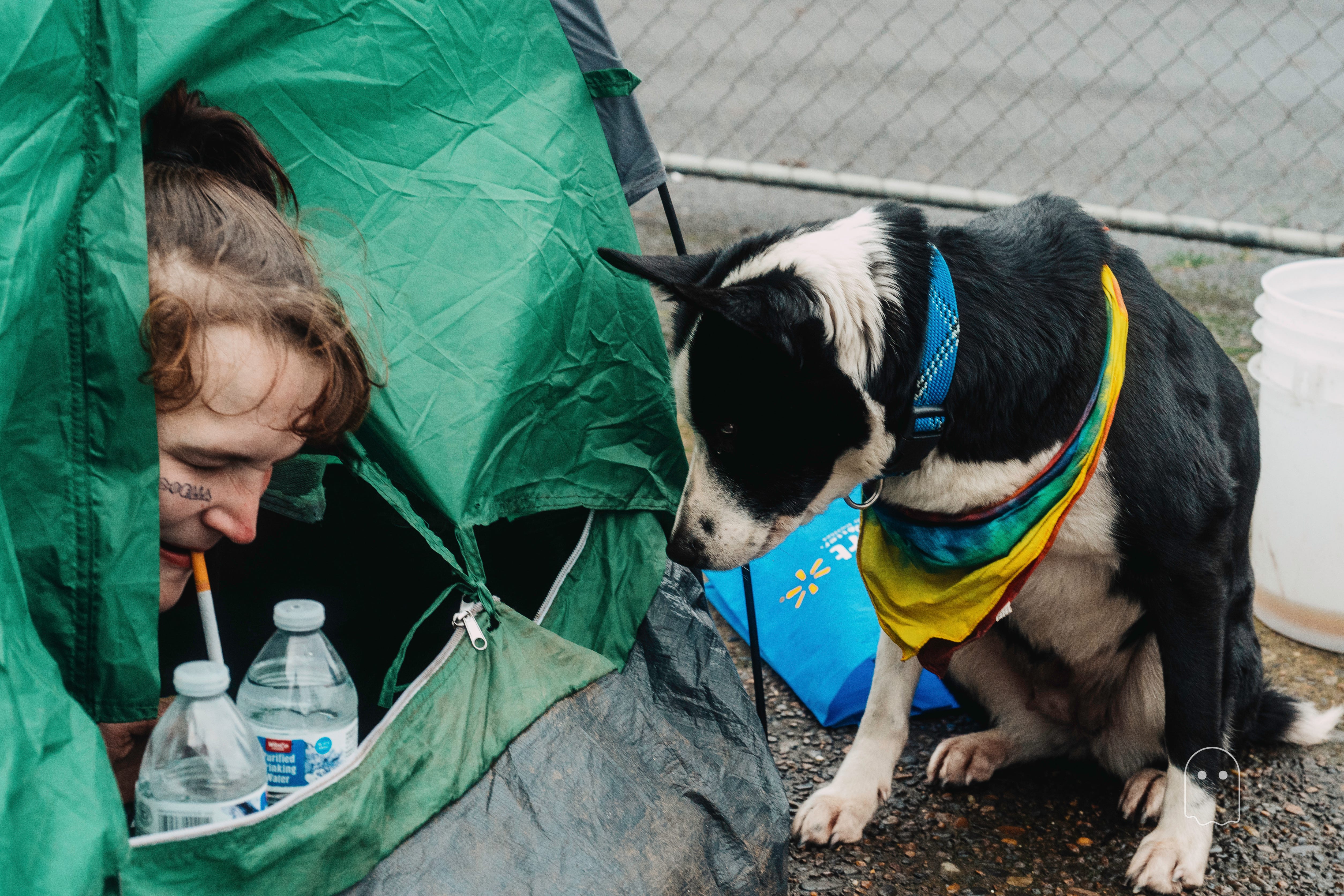
I walked past CODA Treatment Recovery, a methadone clinic in Portland, Oregon, and saw a mixed-breed dog standing on a planter wall. Her owner was slumped in the bushes, clearly nodding out. Clutched in his hand was a piece of tinfoil, used to smoke fentanyl. The dog had a visible wound on the back of her head. After a few minutes, I approached a security guard and asked him to check on the man and the dog. A few staff members came out soon after. One examined the dog but said there were no issues, then they all went back inside.
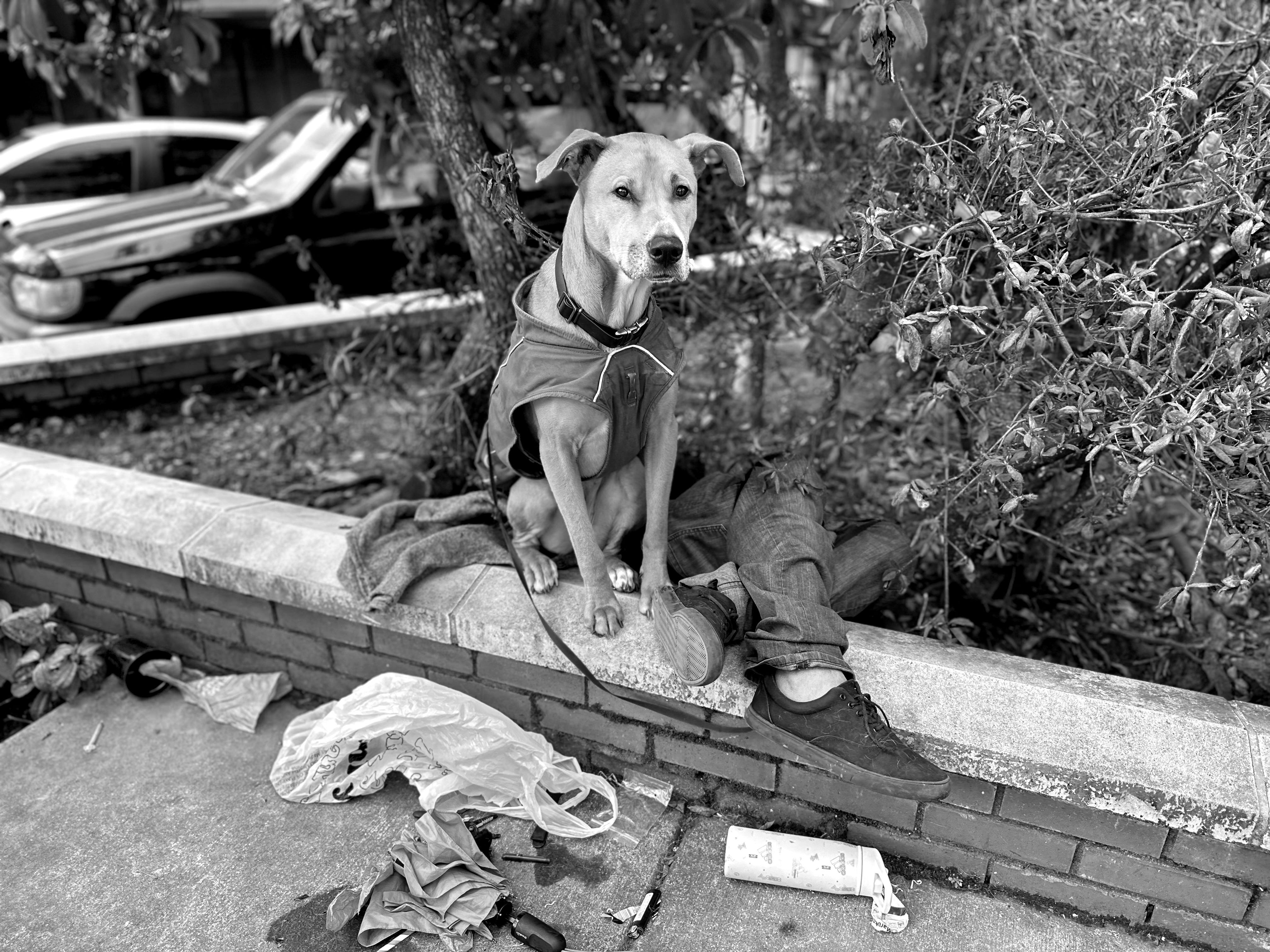
Walking away from that dog was especially hard. She was completely dependent on her owner—a homeless addict. This meant she spent most of her time in unstable, unsafe environments, exposed to the elements. The staff working with her owner had no authority, time, or willingness to address the dog’s condition. Their job was simply to provide methadone. It’s ironic, considering methadone is meant to reduce street opioid use—yet the man was smoking fentanyl just steps from their door.
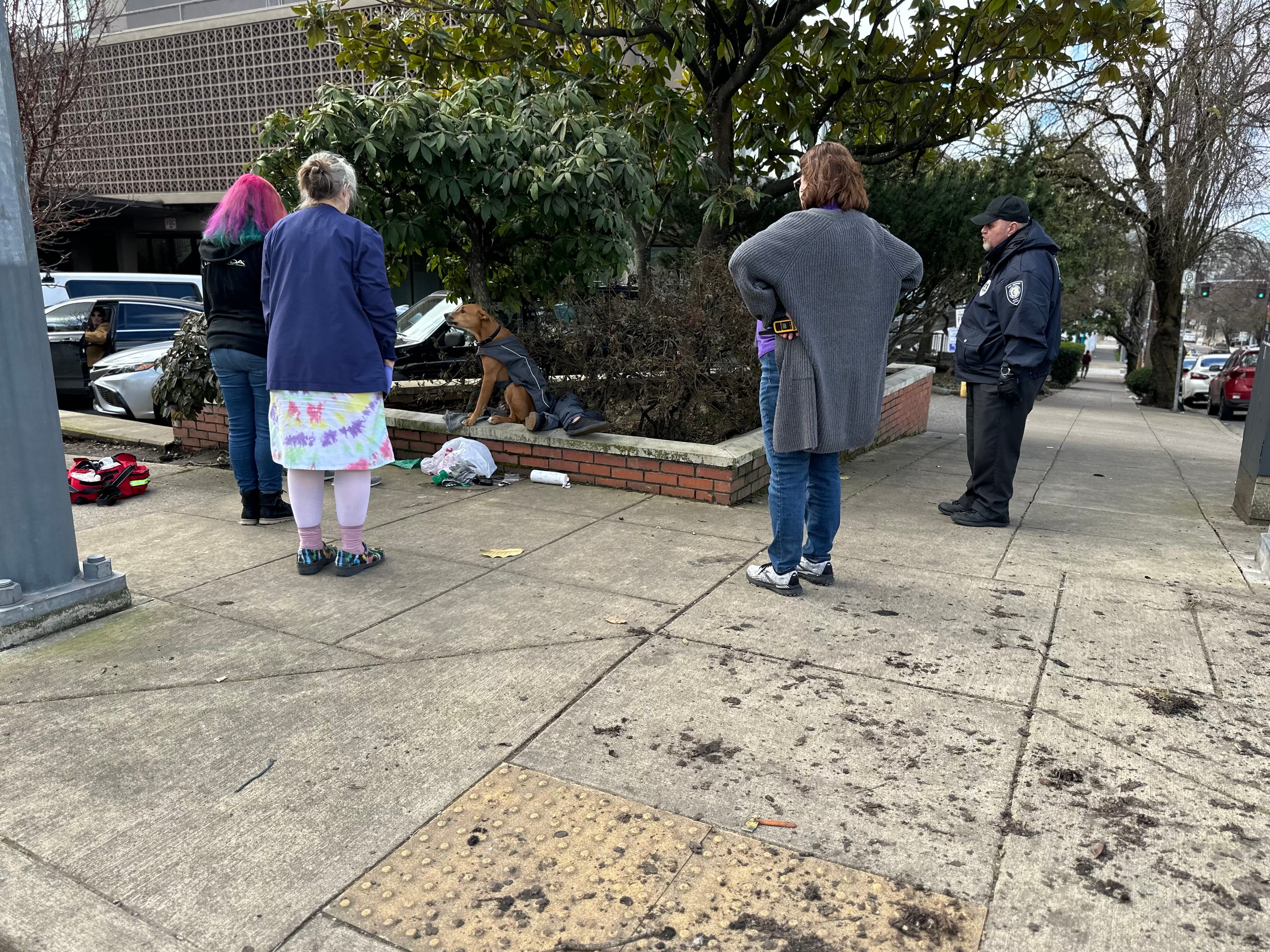
We often talk about how hard life is for people living on the streets—how cold, chaotic, and exhausting it is. But what about the animals these people own—pets who rely on them entirely?

As a journalist regularly working in these areas, I see animals—dogs, cats, even birds—who are not properly cared for. Many are malnourished, injured, hungry, dehydrated, and visibly depressed. I’ve contacted animal control many times, but sadly, I’ve never had a positive experience with them.
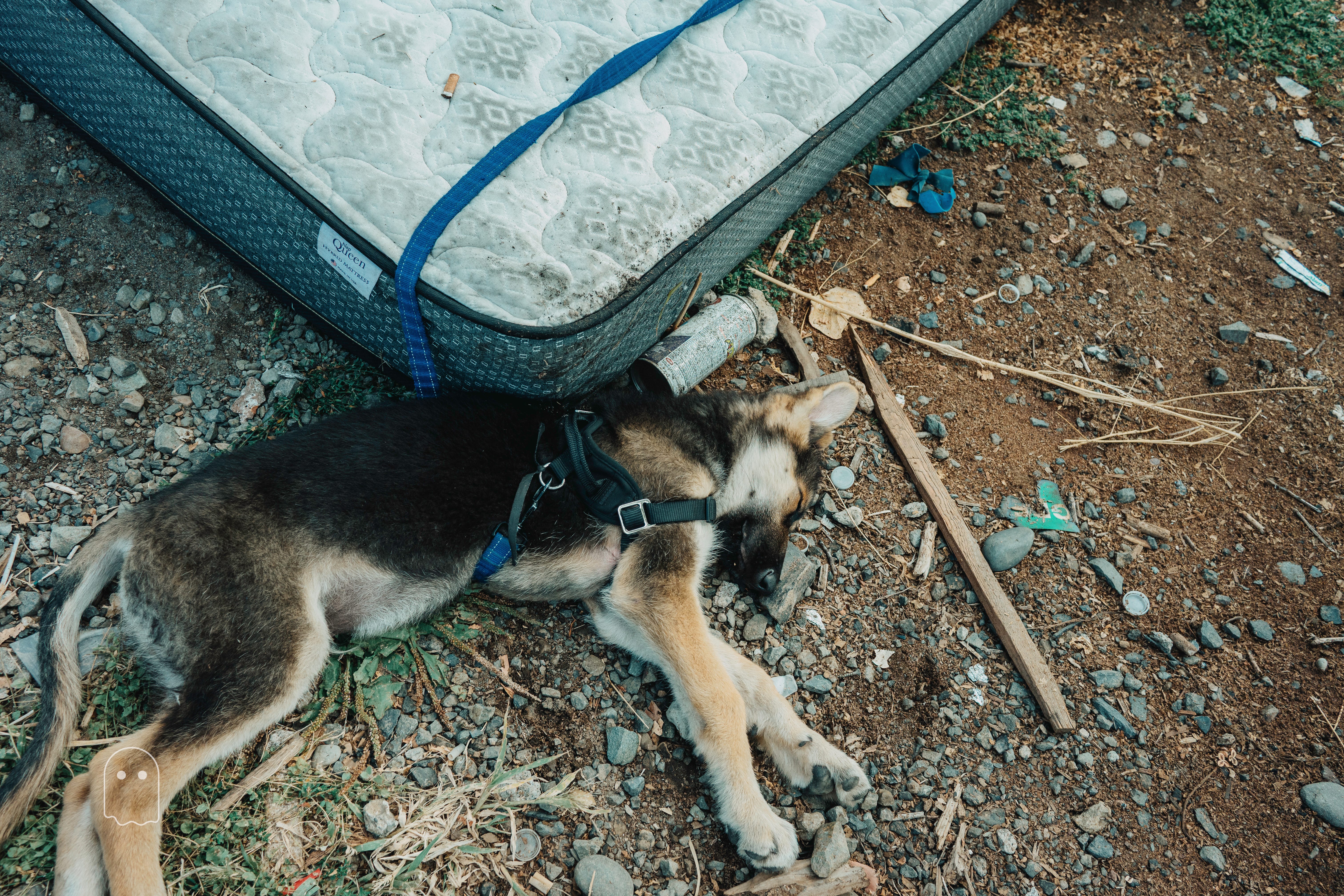
While working with street photographer Tara Faul, we found a malnourished puppy sleeping next to a mattress in North Portland near Delta Park. The owner was unconscious, likely from fentanyl use. We called Multnomah County Animal Services. Unfortunately, we mentioned the dog was at a homeless camp. Per County policy, they sent a homeless outreach team instead. They arrived 40 minutes later, stayed for five minutes, and left when the man declined help. They didn’t even check on the dog, not that it mattered—they had no authority to act.
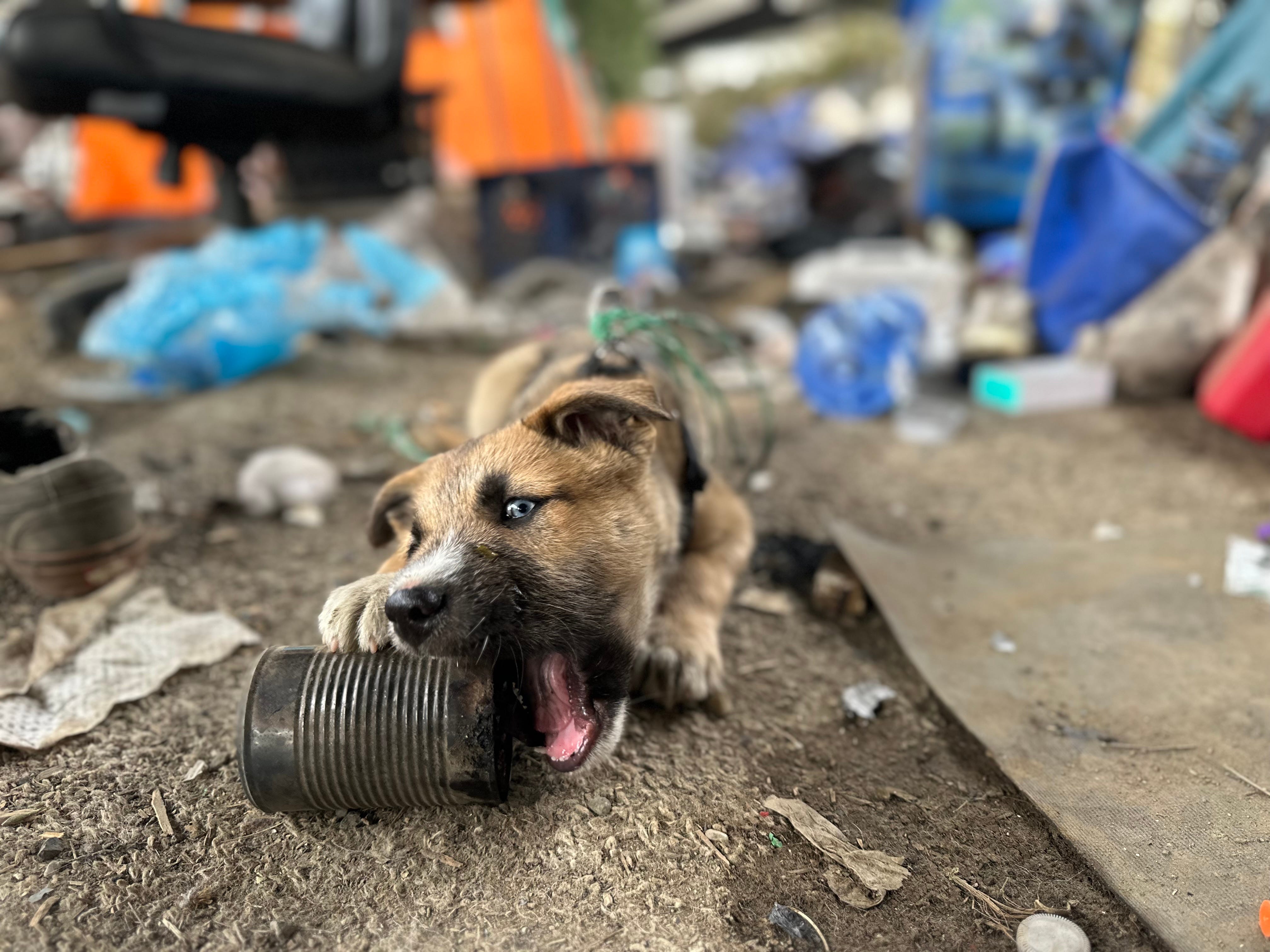
A few days later, I came across another puppy tied to a wheel rim in a large, abandoned encampment. There were no people—just dogs left behind. A nearby homeless person told me the puppies were being trained for illegal dog fights. We called Animal Services again, this time omitting any reference to homelessness. They showed up, took one look, and left. Outreach was attempted again, but with no humans to speak to, they dropped the effort.
Roughly one in three homeless individuals in the U.S.—about 250,000 people—own a pet. Of the thousands of animals I’ve seen on the streets, most are not well cared for. Even those with loving owners who treat them like family still live in chaos, surrounded by danger and instability, without regular vet visits or proper diets.
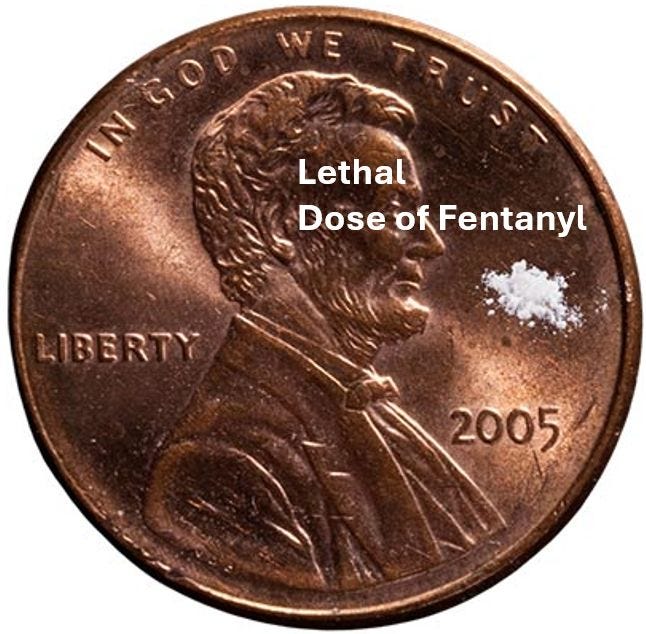
Drug use is rampant on the streets. About 90% of the homeless population struggles with addiction. The drug that has taken over is fentanyl—an opioid fifty times stronger than heroin. It’s often smoked in powder form on foil. The CDC warns that just two milligrams—an amount smaller than a penny’s cheek—can be fatal to an adult male.
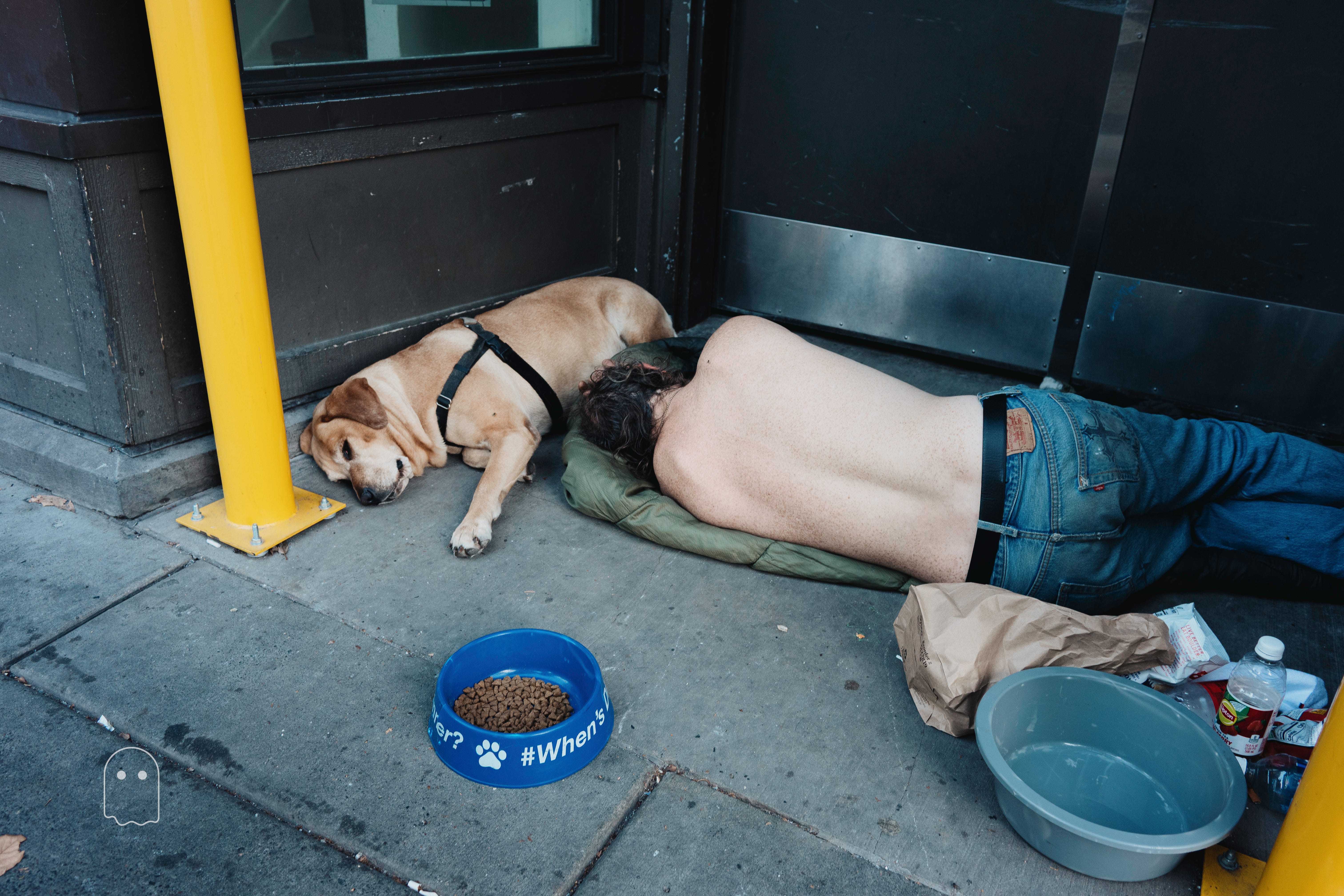
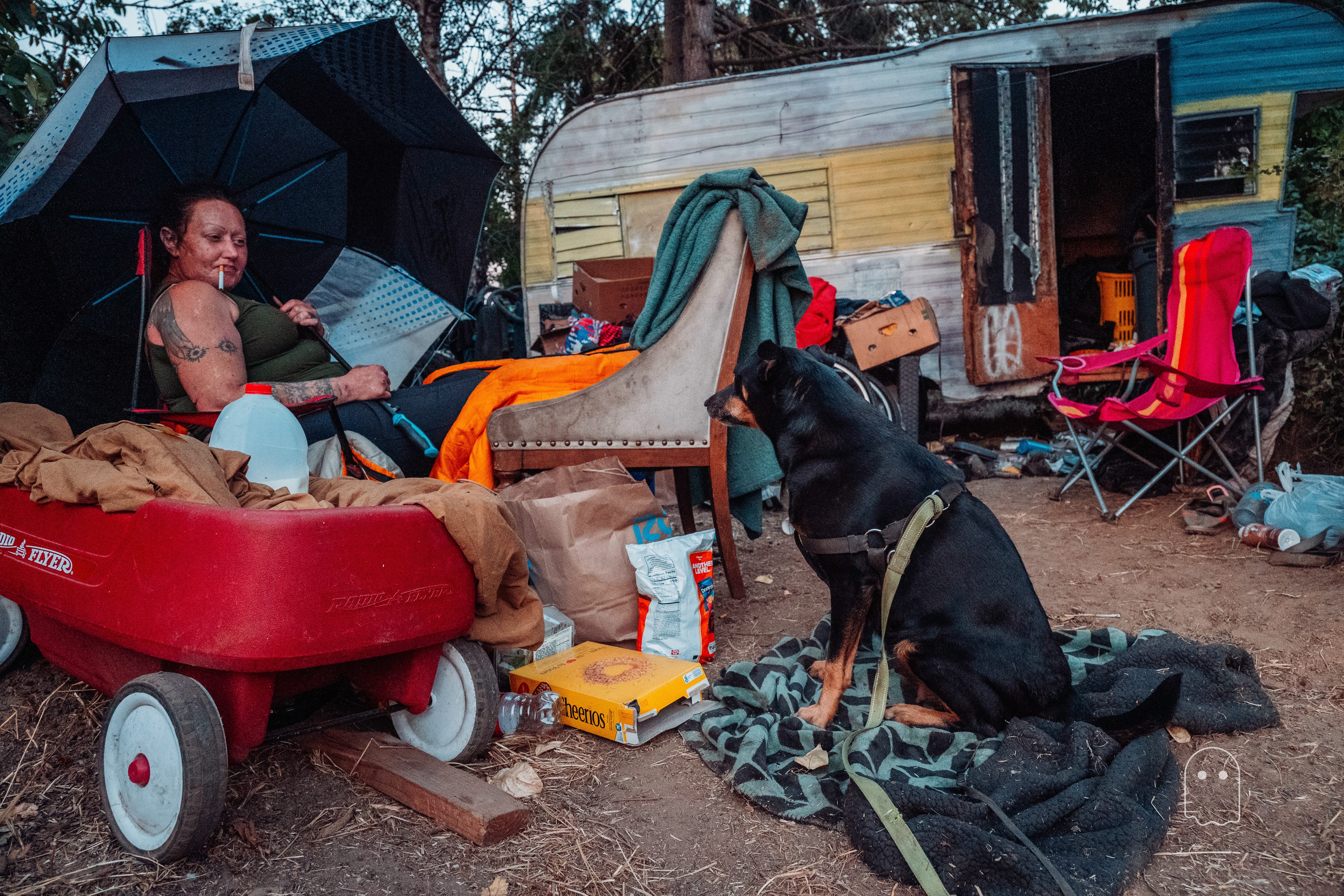
Fentanyl powder is everywhere on the streets. If a person with an addiction drops off to the ground, they may nod off and drop the powder onto their pillow in their tent. The powder will remain on the foil and be discarded. It can get under your fingernails and unknowingly be transferred to another person or pet. This homeless woman owns a dog that has
overdosed three times. Fortunately, each time she had Narcan, an opioid blocker that saved her dog. Animal overdoses and deaths from fentanyl are becoming common. Dogs, in particular, are vulnerable. They sniff, lick, and eat almost anything—and their small size makes exposure potentially deadly if no one is nearby to help.
Pets on the street have short life expectancies, and not from natural causes. I’ve known several animals who died in fires. One woman had a cat in her RV. When she nodded off, she dropped a lit cigarette, causing a fire. She escaped, but the cat panicked and ran to the back. It was last seen clawing desperately at the rear window. Later, she told me her biggest regret was owning a pet in her situation.
When a pet is dependent on someone living in deep addiction, their quality of life suffers dramatically. I often question whether homeless addicts should own animals. Life for a fentanyl user is chaotic. Every moment revolves around getting the next dose to avoid painful withdrawal. They’re surrounded by unstable individuals, often prone to violence or psychosis.
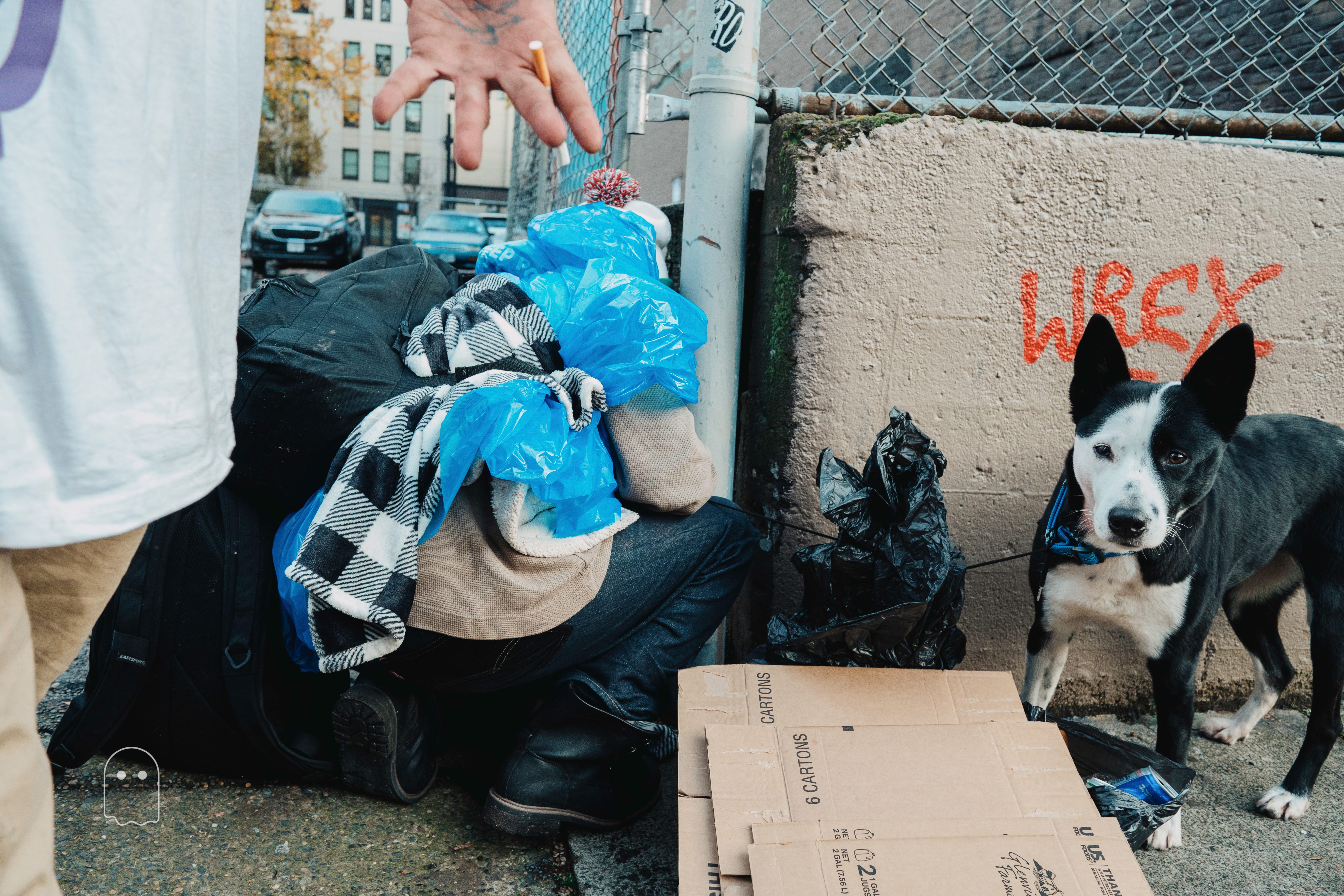
City officials, clean-up crews, county workers, and police are constantly moving the homeless from place to place. You can leave for a moment and come back to find your pet gone—stolen or taken by the government. And yet, you still have an animal relying on you for food, safety, and care. Even the most well-intentioned homeless pet owners cannot meet these needs consistently.
Some drug users qualify for service animals, citing emotional support and reduced anxiety. In certain controlled situations, this works. The companionship releases positive neurochemical responses that may replace the drug’s high. But for a homeless addict who isn’t close to recovery, the pet often suffers instead.
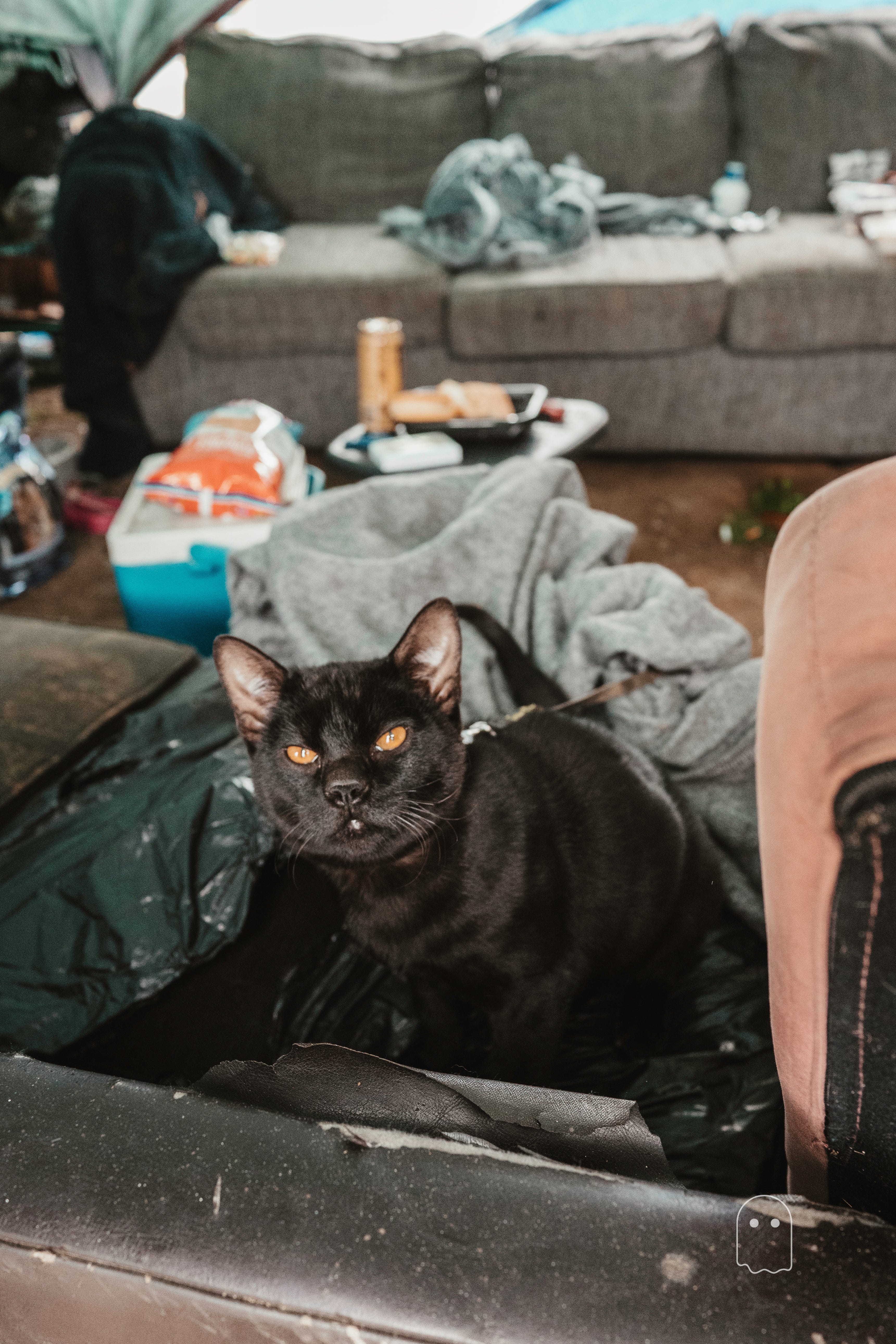
It’s hard to prove neglect or abuse, and service providers are often hesitant to intervene. They fear alienating the homeless individual. In many West Coast cities, the homeless are treated as a protected class. Systems avoid doing anything that might offend, confront, or even mildly inconvenience them.
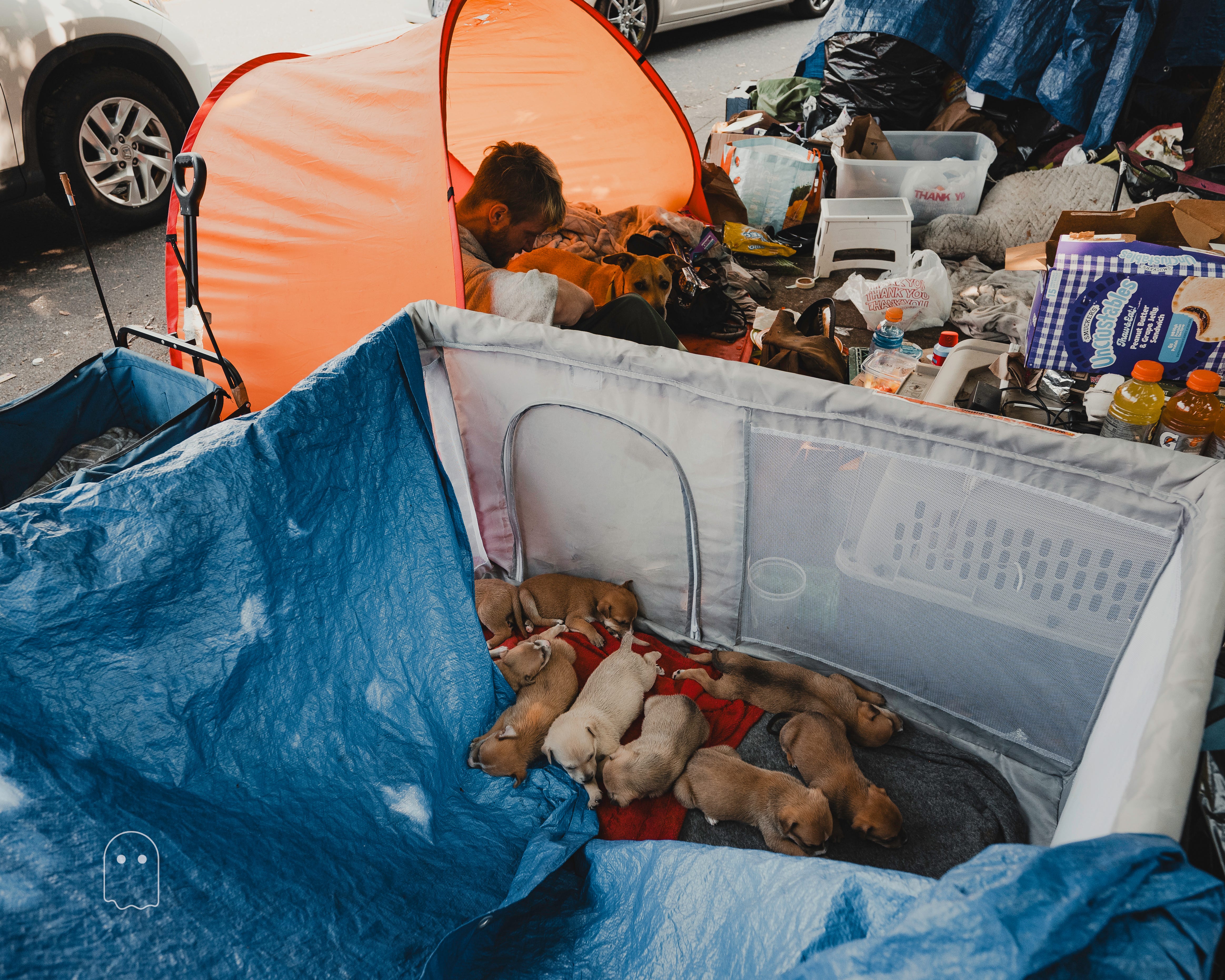
Pets can be wonderful sources of support. I’ve met homeless individuals who deeply love and care for their animals. Some of these animals appear healthy and happy. But those cases are rare. Most street pets are suffering. They need consistent care, attention, shelter, and nutrition—things that are nearly impossible to provide in a street setting.
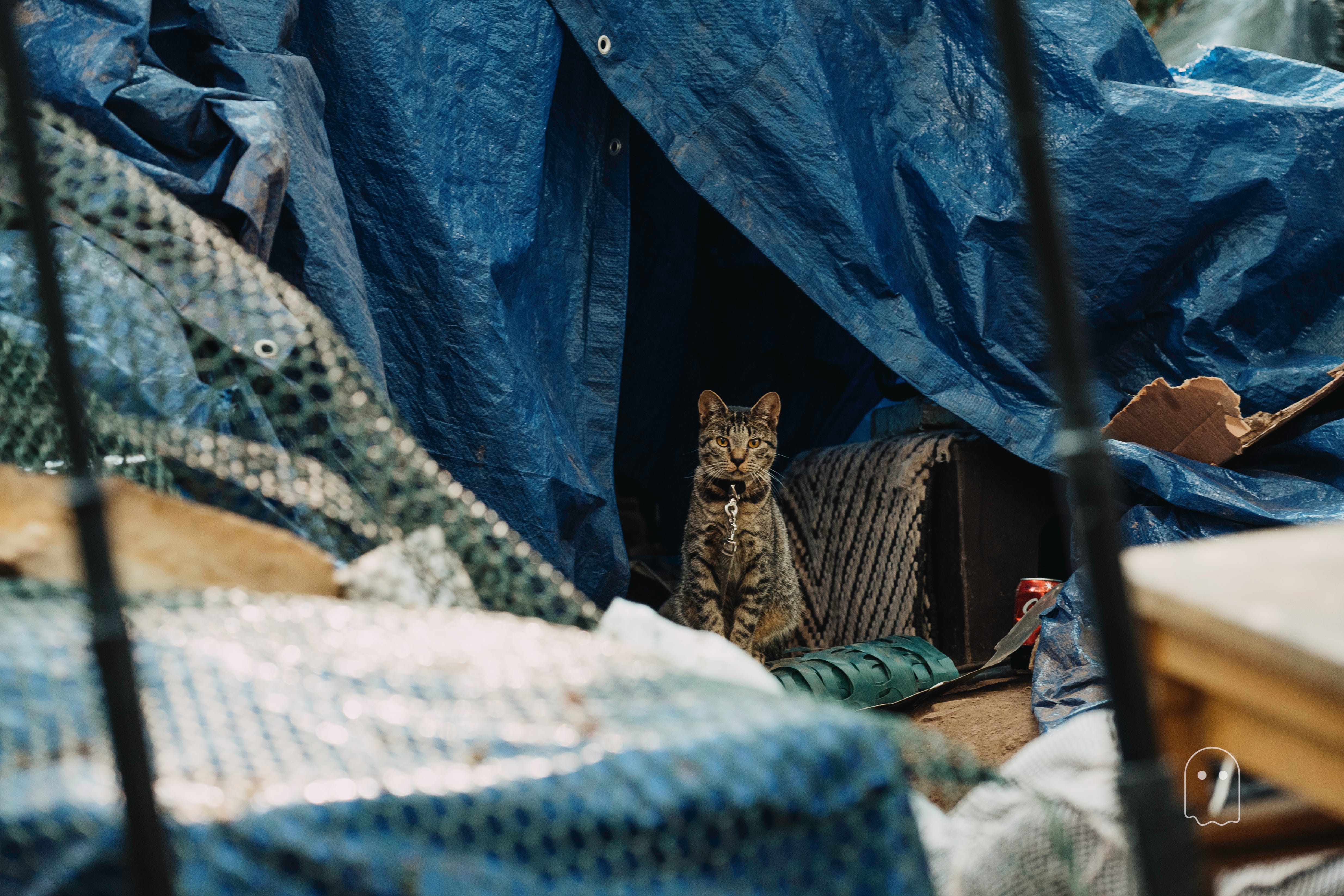
It’s understandable why the homeless seek out pets. They offer companionship in an often-lonely existence. They provide love, purpose, and connection. One solution to reduce suffering is to allow pets in shelters. Currently, only about 3% of shelters in the U.S. permit animals. That’s a major barrier. Many homeless people would rather stay outside than abandon their pets—animals they see as children, as family.
Homelessness is a complex issue and often a highly debated one. The reasons someone ends up on the streets can vary widely. After working in this field for decades and meeting thousands of homeless individuals, I’ve learned that around 40–50% ultimately choose to go to or remain on the streets. Their reasons are just as complex as the issue itself.
But for their pets—who are often tethered beside them—there is no choice.
Please consider becoming a paid Substack subscriber. As an independent journalist, I work for no one and appreciate your support.
Kevin Dahlgren is a freelance journalist, a drug and alcohol counselor and homelessness consultant. He lives in Portland, Oregon, and has worked in social services for over 25 years. truthonthestreets.substack.com