
A new list seems to come out every week reminding us how far Oregon has fallen from the days that national media wrote glowing stories about the emerging utopia in the Northwest.
From the 1990s, when Oregon (and, especially, Portland) attracted more migrants than just about any place in United States, until sometime in the 2010s Oregon was a success story. Maybe Portlandia, the TV series poking fun at Portland in a mostly good-natured way, was a turning point. Because, somewhere along the way our quirks stopped being charming and started becoming problems.
I thought I’d change direction from most of my recent columns and write this week about what Oregon is still good at in the hope we can learn how to apply the lessons of those successes to some of our problems.
When you look for positive publicity about Oregon, two entities stand out as having withstood the onslaught of bad fortune: Portland International Airport and the Oregon wine industry. They remain highly regarded, considered among the best – if not THE best – in the nation. How have they persevered while attractions from downtown Portland to the Oregon Shakespeare Festival, major employers from Nike to Intel, and leaders from Ted Wheeler to John Kitzhaber to Tina Kotek have seen their stock (whether metaphorical or literal) plummet?
Let’s look at their common strengths:
They emphasize excellence
Neither the airport nor the wine industry is the largest in the nation. But they have built a reputation for excellence. This has been particularly important to the wine industry, which has maintained its position at the top of wine rankings even as the industry has contracted here and globally. Lower-quality producers have been hurt more. Oregon is especially strong in an important niche, pinot noirs that are both affordable and high quality.
Anyone who travels regularly sees the difference in PDX and most other airports. The iconic carpet and trend-setting architecture hog the attention, but my favorite characteristic of PDX is a utilitarian one – it has wider concourses than most airports. While architecture and design add to ambience, travelers wouldn’t care if their environs were uncomfortably cramped. What PDX is really good at is making travel easy and enjoyable, and there’s no better measure of excellence for an airport.

They have strong leadership
The Port of Portland, which operates PDX, has had two executive directors in the past 24 years, first Bill Wyatt and now Curtis Robinhold. They brought similar resumes to the job, with stints as chief of staff for Gov. John Kitzhaber (in different stages of Kitzhaber’s career) and extensive private-sector business experience. That combination of deep experience in both government and business is rare today.
The Oregon wine industry has been marked by strong leadership from the beginning in the likes of Richard Sommer, Susan Sokol Blosser and Bill Blosser, Dick Erath and others. All were visionaries, but just as importantly they were good at running the nuts-and-bolts aspects of a business. Too often, our political “visionaries” have no clue how to achieve their goals.
They take advantage of Oregon’s natural gifts
An airport isn’t worth much if no one wants to visit your city. And, while Oregon has seen its attractiveness as a place to live or locate a business decline sharply, it remains a great place to visit because of the mountains, beaches, temperate summers and other God-given amenities.
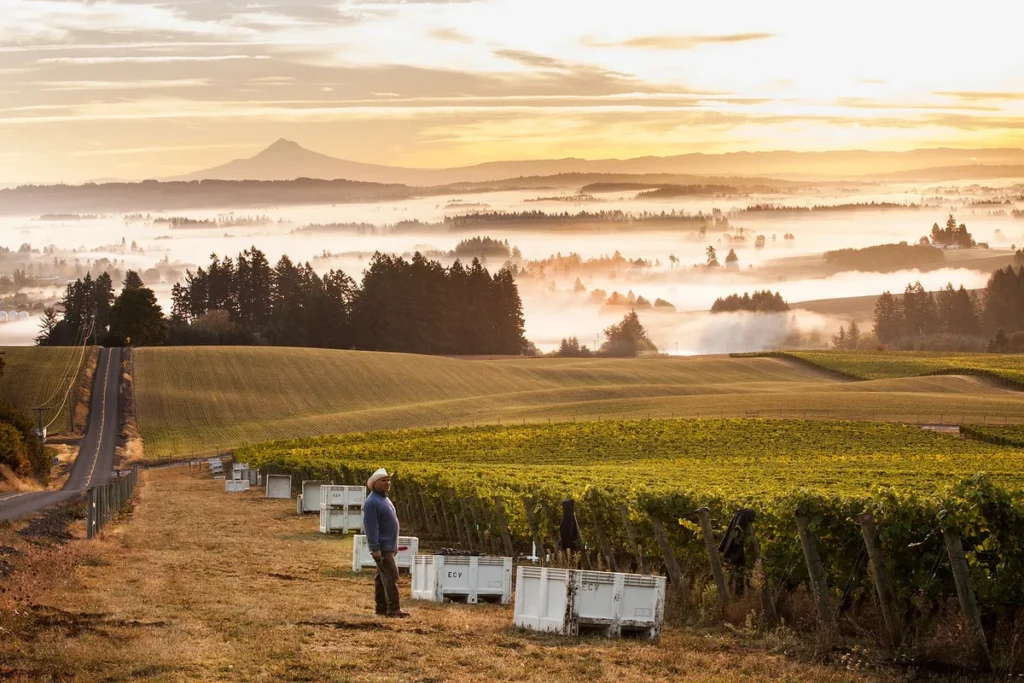
Likewise, Oregon’s wine industry benefits from favorable soil and climate. These natural advantages enable the production of high-quality wine.
Neither entity is over-fixated on equity
To be fair, both wine and air travel are products that mostly attract middle-class and above customers. It’s natural that they face fewer concerns about equity than a housing developer, for example.
But there’s still a lesson to be learned. Don’t waste effort trying to do the impossible. I’ve heard many unrealistic progressive proposals, in Portland and elsewhere, but I can’t recall any serious suggestion of subsidized air fare for low-income passengers. I don’t think even New York City mayoral hopeful Zohran Mamdani has made that proposal. Similarly, any Oregon winery that made the bottom 20 percent of the income spectrum its primary market likely would go out of business.
Any plan for equity must be able to simultaneously achieve the goal of financial solvency or it will fail. Extend the grace these industries receive to other types of commerce.
We don’t overtax them
Oregon’s state wine taxes rank in the bottom 20. Add in the fact we don’t have a sales tax, and the wine industry has a better tax environment than most industries in the state. It’s harder to compare the tax burden of the Portland airport. Many air-travel taxes are federal, but there are a number of other taxes – from rental car taxes to lodging taxes to sales taxes – that affect travelers. Since Oregon doesn’t have a sales tax and its lodging and rental car taxes are, at worst, middle of the pack, the overall tax environment for the airport is favorable.
Bottom line: Our airport and wine industry have some advantages, but they’ve done a good job of building on those advantages. And their biggest advantage may be that government and the various gadflies and activists that hover around Oregon government have allowed them to do what they do best.
As a result, we’ve all benefitted, even if we don’t drink wine or travel much, through the money they pump into the economy and the positive attention they draw to Oregon.
This article originally appeared in the Oregon Roundup.